TITLE: AI and the Future of Education: Disruptions, Dilemmas, and Directions
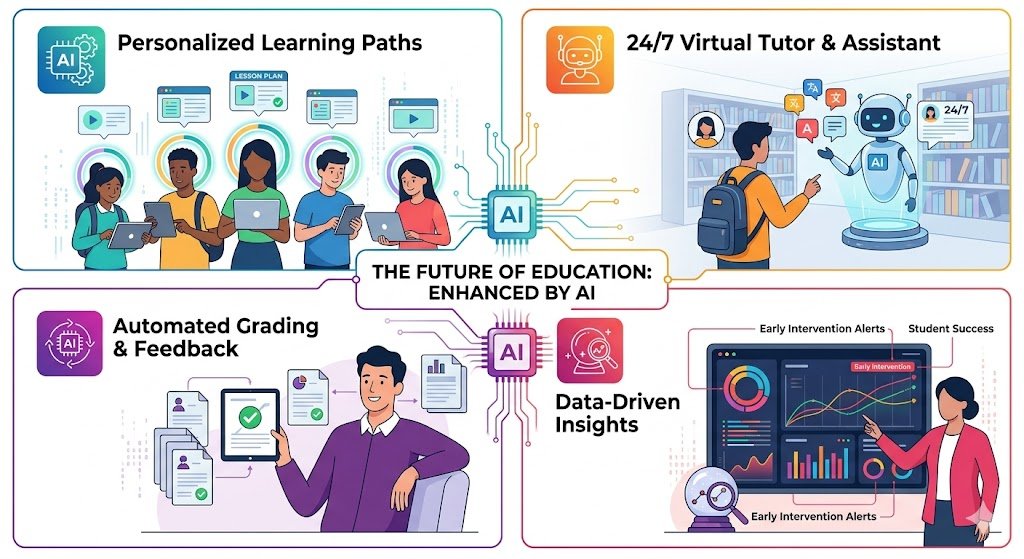
The future of education with AI is all about making learning easier, faster, and more fun. Instead of every student following the same lesson, AI acts like a personal tutor that understands exactly what you need help with and how you learn best.
CONTENT: Imagine waking up for school in the year 2030. You don’t grab a heavy backpack full of dusty textbooks. Instead, you grab a slim tablet or put on a pair of lightweight smart glasses. School hasn’t disappeared, but it has changed into something much more exciting. This is the world of Artificial Intelligence (AI) in education, and it is designed to make learning feel less like a chore and more like a personal adventure. In the future will act like a personal coach for every student. Instead of everyone learning the same thing at the same speed, AI will change the lessons to fit exactly how you learn, making sure you never get bored or confused. It will also be there to help 24/7, so you can get answers to your questions even when school is closed. For teachers, AI takes over the "boring" parts of the job, like grading and paperwork, giving them more time to actually talk to and help their students. Finally, it makes school fairer and more fun by translating languages instantly and using cool technology to turn lessons into exciting adventures.
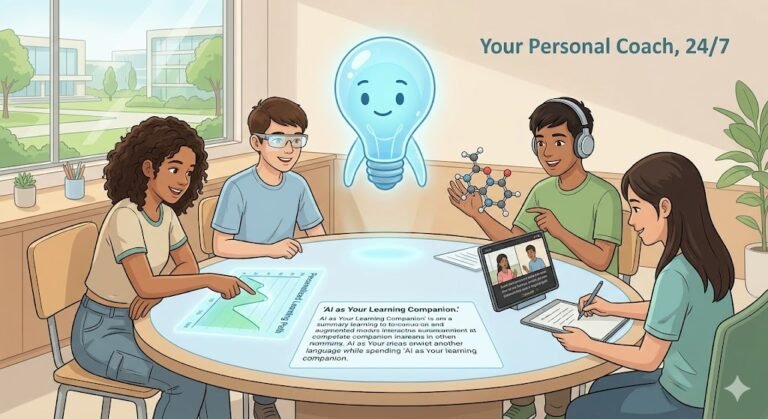
- Hyper-Personalised Learning Paths: Future systems will dynamically adjust not just the difficulty but also the style of content—such as switching from text to video-based lessons—based on a student's real-time emotional state and mastery levels.
- AI as a Lifelong Learning Ally: AI will shift from being a classroom tool to a continuous guide that helps individuals develop "micro-credentials" and adapt their skills to meet evolving job market demands throughout their careers.
- Teacher Efficiency: By automating repetitive tasks like grading and attendance, AI gives teachers more time to focus on mentoring and supporting students' emotional needs.
- Universal Accessibility: AI tools like real-time translation and speech-to-text help students with disabilities or language barriers access the same quality of education as their peers.
AI in future education offers these core advantages:
- Personalized Learning: Lessons automatically adjust to each student’s speed, strengths, and weaknesses.
- 24/7 Support: AI tutors provide instant help and explanations at any time of day or night.
- Automated Grading: Teachers save hours on admin and grading, allowing more time for one-on-one mentoring.
- Immediate Feedback: Students see errors and learn from them instantly rather than waiting days for results.
- Universal Access: Real-time translation and speech-to-text tools make learning accessible to everyone, regardless of language or disability.
- Early Intervention: Data analytics predict which students are struggling so teachers can help before they fall behind.